
Shipping high-value equipment involves risks that extend far beyond the price of repairs. When critical machinery arrives damaged, production stops, deadlines slip, and entire operations fall behind schedule. Many companies learn this only after generic packaging fails under real transport conditions. I experienced this myself when a poorly crated machine caused weeks of downtime we never budgeted for. That is why choosing the right crating company is essential before sending any high-value asset on a long-distance or international route.
Why Custom Crating Is Different | Why It Protects Your Equipment Better Than Generic Packaging
Custom crating is engineered around the equipment itself, starting with weight distribution, balance, and structural weak points that generic boxes never address. Sensitive components require stabilization to prevent vibration damage during long transits across highways, ports, or air cargo terminals. Properly placed lift points and tie-downs ensure safe handling at every stage, from rigging to final installation. This tailored design dramatically reduces the risk of impact stress, shifting loads, or structural failures. Companies save time, money, and often warranties by using crates built specifically for their machinery.
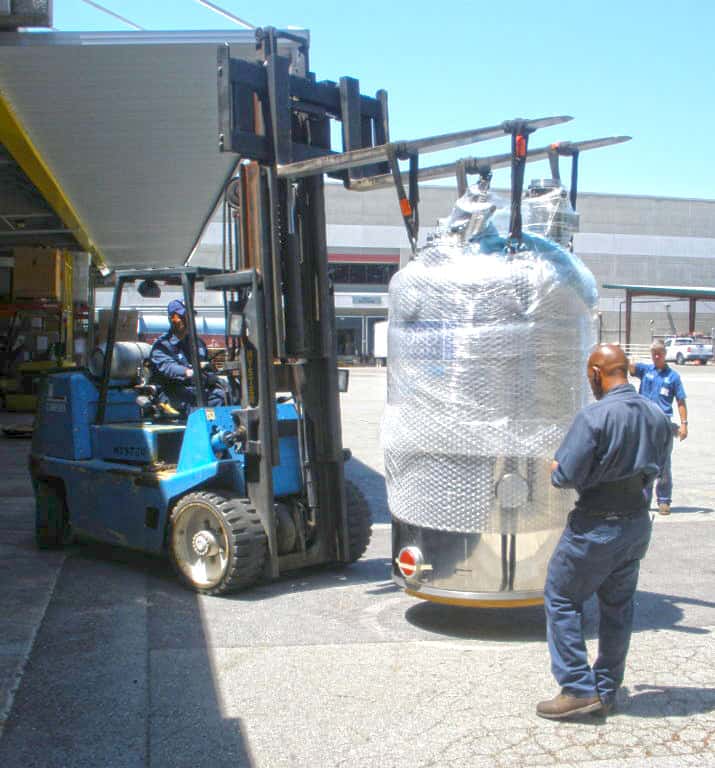
Lawson Drayage handles equipment that simply cannot be replaced: from CNC machines, medical imaging units, aerospace components, high-tech electronics, and heavy industrial systems. Each custom crate distributes weight evenly and supports the machine frame during loading, unloading, and transit. Internal bracing limits vibration that can loosen fasteners or damage precision surfaces. Rigging lift points are matched exactly to the crate to prevent structural stress. Businesses avoid extended downtime because equipment arrives ready for immediate setup.
Standard packaging cannot withstand stacking, jolting, and multi-carrier handoffs typical of modern logistics networks. Custom crates use engineered foam padding, impact restraints, and reinforced structures designed for specific equipment profiles. This precision protects delicate optics, electronics, and motion-control systems during long or complex journeys. When high-value assets are involved, the investment in proper crating pays dividends by keeping operations running.
What a Professional Crating Company Should Do Before the First Board Is Cut
Professional crating begins with a detailed site evaluation. Teams measure the equipment precisely and review how it will be handled, lifted, loaded, and removed. They determine whether partial disassembly reduces risk and document exact configurations for reassembly. Planning covers blocking, bracing, securement methods, and the physical route the machine must travel within the facility. Every decision anticipates real handling conditions, not ideal ones.
Lawson Drayage conducts comprehensive site surveys that map equipment dimensions, access points, and the path required for forklifts, cranes, or gantries. These assessments identify obstacles early, ensuring the crate design supports safe extraction and transport. Environmental concerns such as rain exposure or staging delays are resolved upfront through protective coverings or adjusted timelines. This preparation ensures each crate integrates seamlessly with rigging and logistics schedules.
Understanding transit exposure influences everything, from brace density to pallet strength to exterior reinforcement. A crate traveling by ocean freight requires different safeguards than one on a short domestic haul. Multi-modal moves with multiple transfers face the highest handling risks, so additional reinforcement becomes essential. When these factors are defined early, logistics and crating remain aligned throughout the project.
Moisture Barriers and Environmental Protection: The Most Overlooked Risk in Crating
Moisture causes as much damage to high-value equipment as physical impacts do. Temperature swings during international or overland travel create condensation inside poorly protected crates, leading to rust, corrosion, and silent electronic failures. Professional crating companies use vapor-barrier wraps that seal out humidity while maintaining safe temperatures. Desiccants absorb residual moisture and stabilize internal environments. These protective layers make the difference between a machine that powers on and one that requires immediate repair.
Lawson Drayage incorporates moisture-barrier materials into crating for sensitive electronics, aerospace components, medical devices, and precision machinery. Vapor-proof films conform to irregular shapes without creating heat pockets. Desiccants mitigate humidity spikes during long voyages or temporary storage. Sealed joints and reinforced lids prevent moisture ingress in unpredictable climates. Our approach ensures delicate systems arrive free of corrosion-related failures.
Environmental protection often goes ignored until damage appears, which is usually after weeks at sea or in humid ports. We add ventilation solutions when needed to balance pressure changes while blocking moisture pathways. Metal surfaces receive corrosion inhibitors before sealing, and circuitry may be covered to prevent condensation. This level of protection is essential for equipment bound for high-humidity regions or variable climates.
Why Rigging Experience Is Essential When Choosing a Crating Company
Crating companies without rigging knowledge overlook critical handling realities—from forklift pocket placement to sling angles during lifts. Real-world handling stresses crates far more than shop conditions do. When companies separate crating from rigging, design flaws often appear during the first lift or transfer. An integrated provider understands how equipment will be handled through every stage of the move and designs accordingly.
Lawson Drayage offers turnkey handling: rigging, disassembly, crating, transport, and storage. All under one coordinated system. Our machinery movers design crates with built-in access points that match forklift and crane requirements. Reinforcements support areas that experience the highest handling forces during staging and transfers. Delivery schedules sync with rigging and installation teams, reducing handoffs that increase risk. This end-to-end approach creates predictable, safe outcomes even for the most complex assets.
True machinery-handling expertise protects equipment where it is most vulnerable: during lifts, transfers, stacking, and temporary staging. Crates built with rigging experience withstand the stress of ocean containers, rail transport, and high-load warehouses. Secure storage options hold equipment safely during customs delays or schedule changes. Businesses choose Lawson Drayage because we minimize exposure at every touchpoint of the move.
Custom Crating Protects Your Investment And Your Operations
High-value equipment demands custom protection that addresses weight, handling, moisture, and real-world transport conditions. Generic packaging fails too often to rely on for critical assets. Choosing a provider with both rigging and crating expertise ensures machines arrive ready for installation rather than repair. With more than 100 years of machinery-moving experience, Lawson Drayage delivers crating solutions engineered around how equipment is actually moved, stored, and transported.
If you’re preparing to ship high-value machinery, whether domestically or internationally, contact Lawson Drayage for a site evaluation and custom crating plan. Share your equipment details, timelines, and destination requirements, and our team will design a crate that protects your investment from the first lift to final installation.